{{ 'fb_in_app_browser_popup.desc' | translate }} {{ 'fb_in_app_browser_popup.copy_link' | translate }}
{{ 'in_app_browser_popup.desc' | translate }}
全館消費,折扣後滿$1500,台灣地區免運費
{{ childProduct.title_translations | translateModel }}
{{ getChildVariationShorthand(childProduct.child_variation) }}
{{ getSelectedItemDetail(selectedChildProduct, item).childProductName }} x {{ selectedChildProduct.quantity || 1 }}
{{ getSelectedItemDetail(selectedChildProduct, item).childVariationName }}
折扣後,消費金額滿1500元,台灣地區免運費 on order
消費滿$500,ATM轉帳優惠折扣20元 on order
【專屬回饋】結帳金額扣除優惠後,單筆滿 NT$999,即贈「貓咪造型零錢包」1 個(顏色隨機),不累贈。數量有限,贈完為止。 on order
Not enough stock.
Your item was not added to your cart.
Not enough stock.
Please adjust your quantity.
{{'products.quick_cart.out_of_number_hint'| translate}}
{{'product.preorder_limit.hint'| translate}}
Limit {{ product.max_order_quantity }} per order.
Only {{ quantityOfStock }} item(s) left.
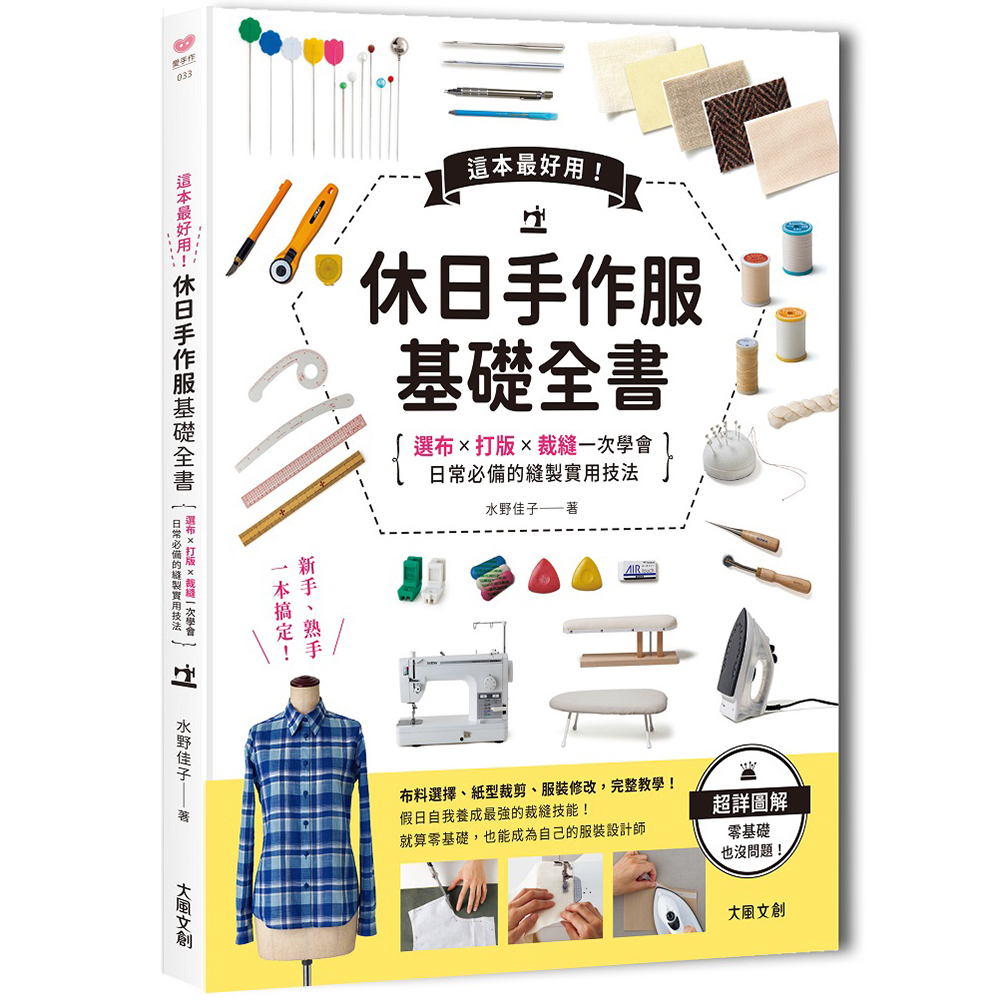
Author: Yoshiko Mizuno
Translator: Fang Guan-ting
Publisher: Dafeng Cultural & Creative
Publication Date: April 8, 2021
Format: Paperback / 136 pages / 19 x 26 x 0.9 cm / Standard / Full-color printing / First edition
Book Overview:
Super simple × super practical!
From fabric selection, pattern modification, cutting diagrams, ironing techniques to sewing completion—
A book that helps you quickly grasp the tricks and develop sewing skills during your holidays!
Even beginners can modify clothes and pants by themselves!
Basic sewing techniques suitable for both novices and experienced crafters:
Full illustrations of pattern drawing, modification techniques; organizing fabric patterns, cutting fabric pieces; starting and ending stitches, darting, gathering, pleats, and easing—all designed to make sewing your own clothes easier and more enjoyable!
Practical sewing skills you can use immediately—sew quickly and get a perfect fit!
Too long pants, too short skirts, narrow cuffs... Ready-made clothes often don’t fit perfectly, and alterations cost money!
This handy book enables you to quickly learn mending skills and apply them to your daily wardrobe, making clothes fit better in no time!
Create your own style and wear unique clothes
Understand fabric properties, press and attach interfacing, add pockets and zippers to showcase versatile functional designs, and craft practical garments.
Whether hand sewing or machine sewing, all techniques are covered—design your own clothes during your holidays!
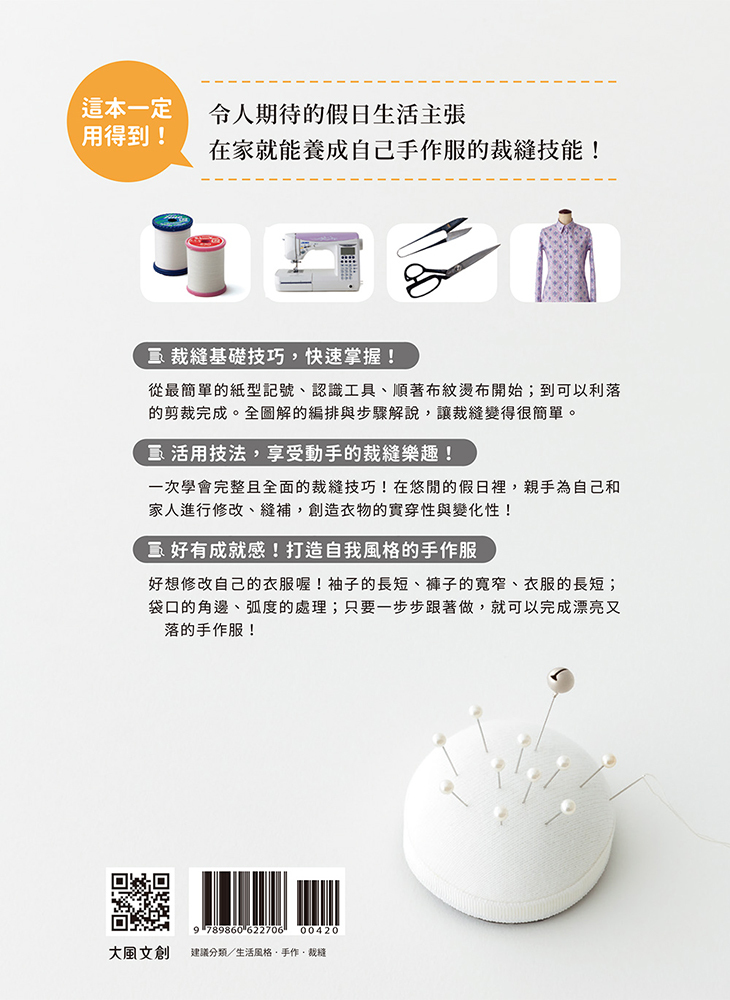
Features of this book:
1. No fear for beginners! Fully illustrated pattern drafting techniques
Starting from the basics—drawing patterns, choosing the right curve ruler, and pairing with easy-to-use cutting tools.
Whether hand sewing or machine sewing, the book’s clear, full-illustration layout with detailed step-by-step instructions makes sewing straightforward and accessible.
2. Practical techniques! Get started right away during your holidays
Follow sections on pressing, interfacing, cutting, seam allowances, and sewing to learn comprehensive sewing skills in one go!
Spend relaxing holidays modifying and mending clothes for yourself and your family, creating versatile garments!
3. A great sense of achievement! Enjoy the fun of sewing
Eager to modify your clothes?
From familiarizing yourself with tools and materials, building foundational skills, to everyday sewing and mending techniques—step by step, you can adjust sleeve length, pant width, garment length, pocket edges, curves, and more.
Using pattern modifications, you’ll find joy in creating beautiful, detailed handmade clothes!
★ Includes a free full-color, life-size pattern and complete tutorial: "Cute Sheep Backpack" ★
The most detailed! Actual photos and illustrations—full-color, clear, and easy to understand. Licensed for safe production.
Fastest! 100% life-size pattern (41cm x 55.5cm, one sheet), with lines not overlapping—cut and trace directly onto fabric without photocopying or redrawing.
Most convenient! Pre-folded to A4 size, easy to store in standard folders, reusable for multiple projects!
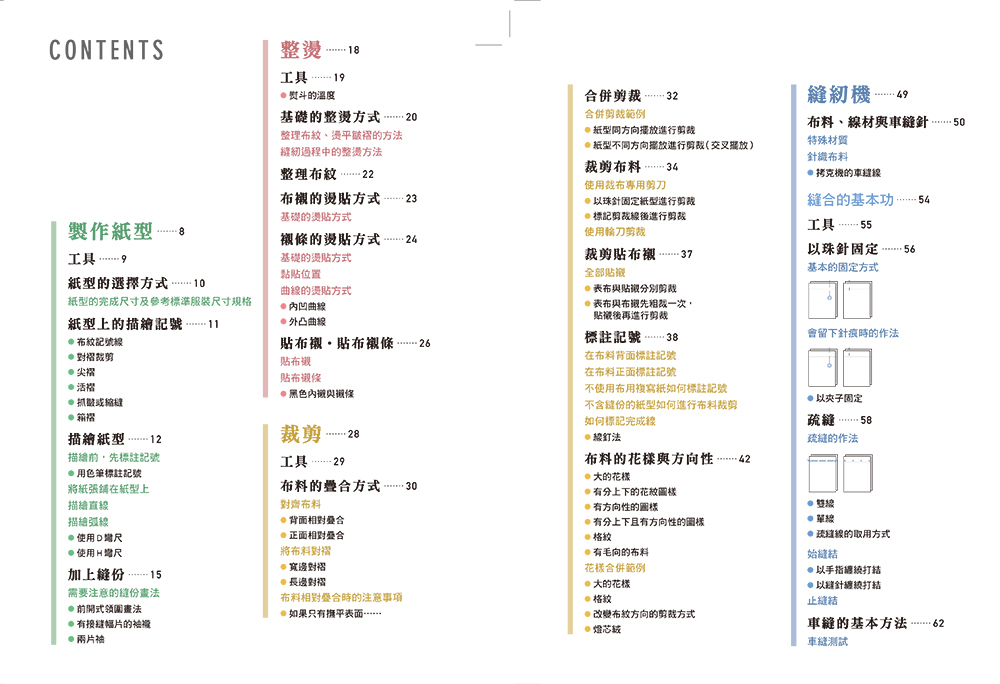
Table of Contents:
Pattern Making
Tools
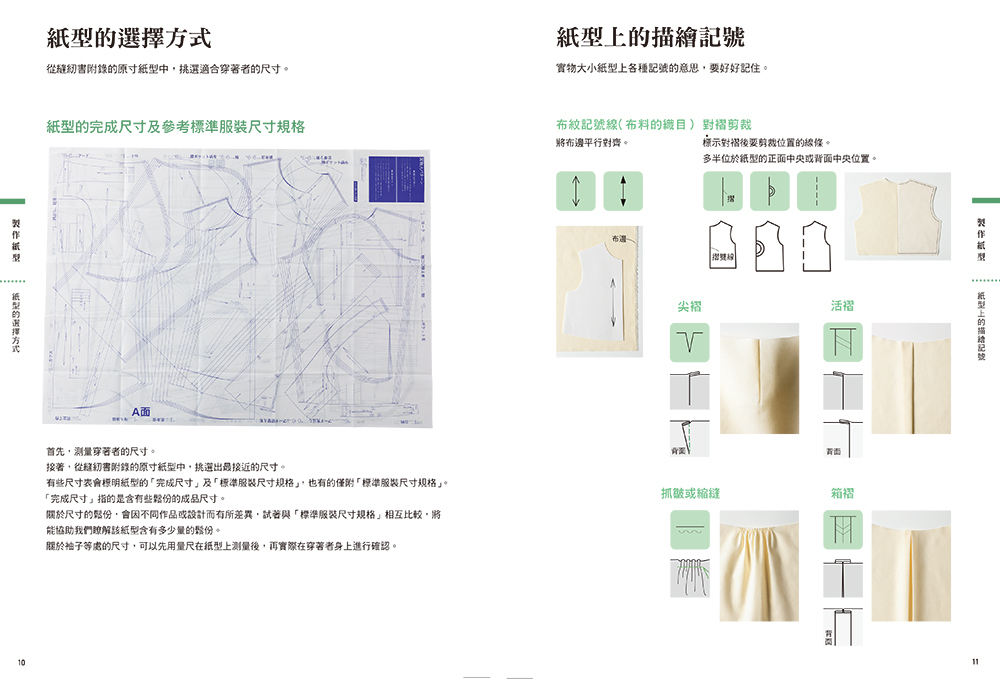
How to Choose Patterns
Finished Pattern Size and Body Measurements for Reference
Pattern Markings
- Fabric Grain Line
- Folded Cutting
- Dart
- Pleats
- Gather or Ease Stitching
- Box Pleats
Drawing Patterns
Markings Before Drawing
- Using Colored Markers for Markings
Laying Out Paper on Pattern
Drawing Straight Lines
Drawing Curves
- Using D Curves
- Using H Curves
Adding Seam Allowances
Important Seam Allowance Techniques
- Front Opening Collar
- Armholes with Seam Piped
- Two-piece Sleeves
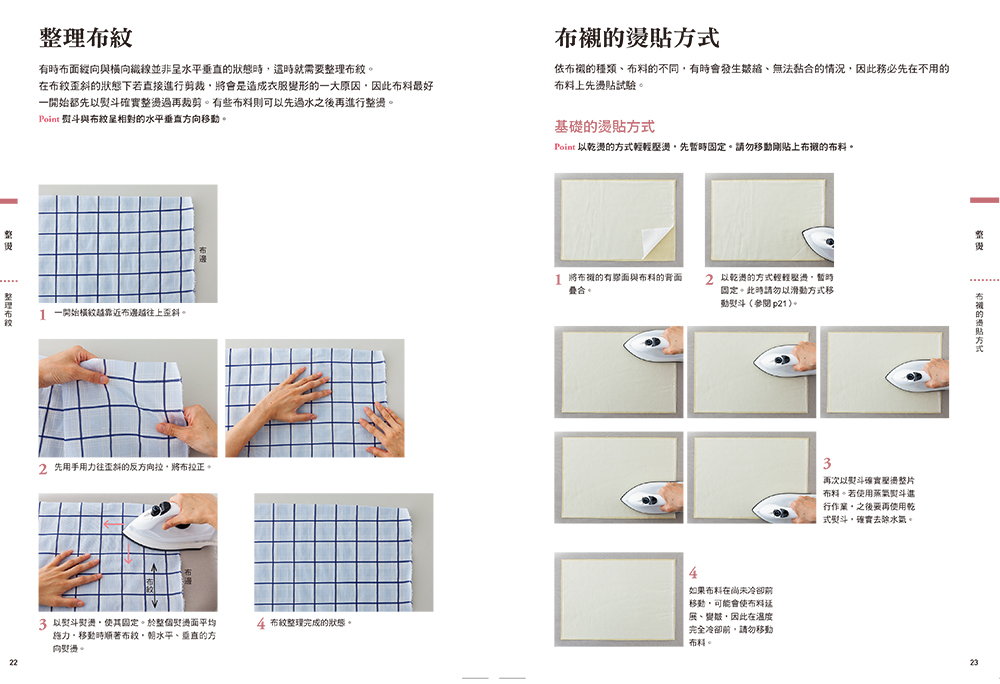
Pressing Techniques
Tools
- Iron Temperature
Basic Pressing Methods
Methods for Organizing Fabric Grain and Flattening Pleats
Pressing During Sewing
Organizing Fabric Grain
Attaching Interfacing
Basic Iron-on Interfacing
Iron-on Piping
Basic Iron-on Techniques
Positioning of Interfacing
Curved Seam Allowances
- Inner Curves
- Outer Curves
Attaching Interfacing and Piping
- Attaching Interfacing
- Attaching Piping
Black Interfacing and Piping
Cutting
Tools
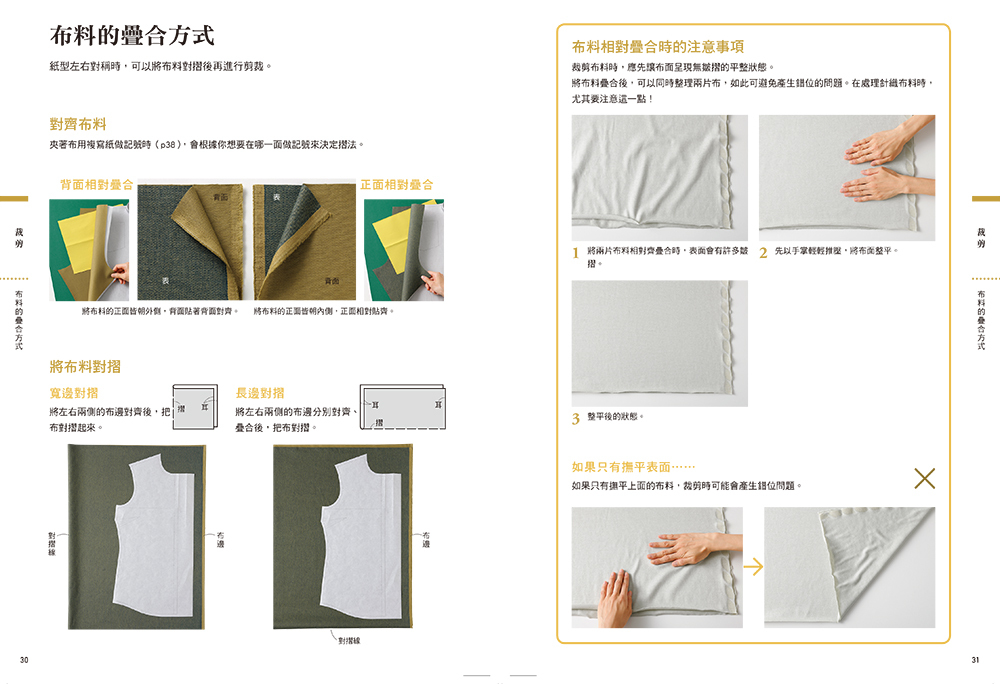
Layering Fabric
Aligning Fabric
- Wrong sides together
- Right sides together
Folding Fabric
- Widthwise fold
- Lengthwise fold
Precautions When Layering Fabric
- If only smoothing the surface…
Combining Patterns
Pattern Layout Examples
- Cutting with patterns placed in the same direction
- Cutting with patterns placed crosswise (intersecting)
Cutting Fabric
Using dedicated fabric scissors
- Pinning pattern to fabric before cutting
- Marking cutting lines before cutting
Using rotary cutter
Cutting Interfacing
Attaching Interfacing
- Cutting interfacing separately from fabric
- Rough cutting first, then attaching and trimming
Marking
Marking on the back of fabric
Marking on the front of fabric
How to mark without chalk paper
How to cut fabric patterns without seam allowances
Marking finished lines
- Using pinning method
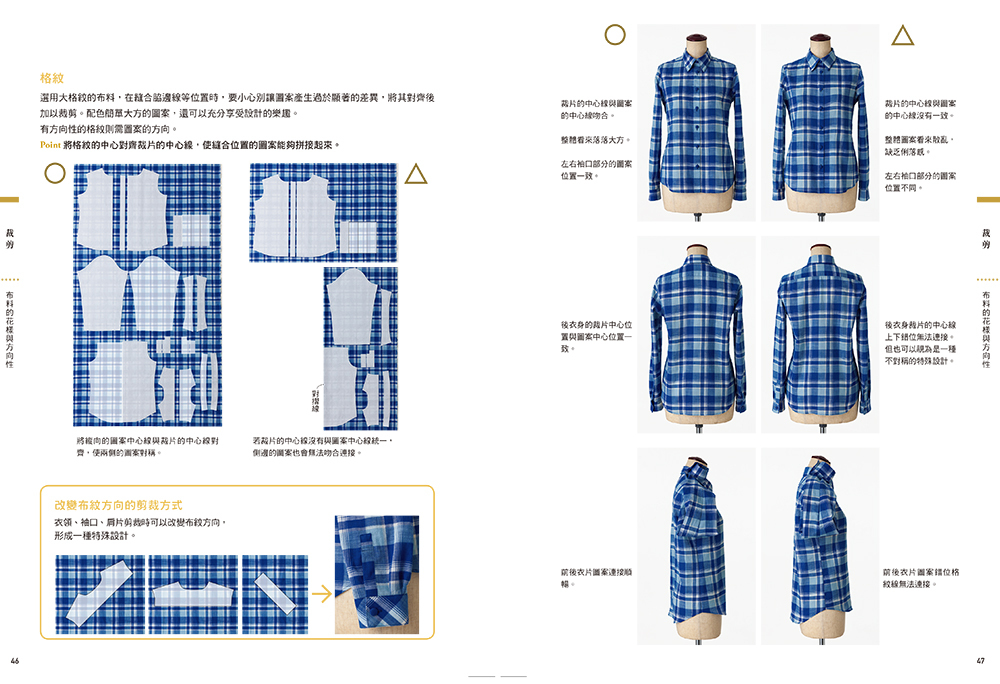
Fabric Pattern and Grain Direction
- Large patterns
- Patterns with top and bottom parts
- Directional patterns
- Patterns with top/bottom and directional features
- Stripes
- Napped fabrics
Pattern Matching Examples
- Large patterns
- Stripes
- Cutting methods to change fabric grain direction
- Corduroy
Sewing Machines
Fabrics, Threads, and Sewing Needles
Special Materials
Knitted Fabrics
- Sewing with overlock machine
Basic Sewing Skills
Tools
Pinning with pins
Basic pinning methods
Handling needle marks
- Using clips
Basting
Basting methods
- Double thread
- Single thread
- How to use basting stitches
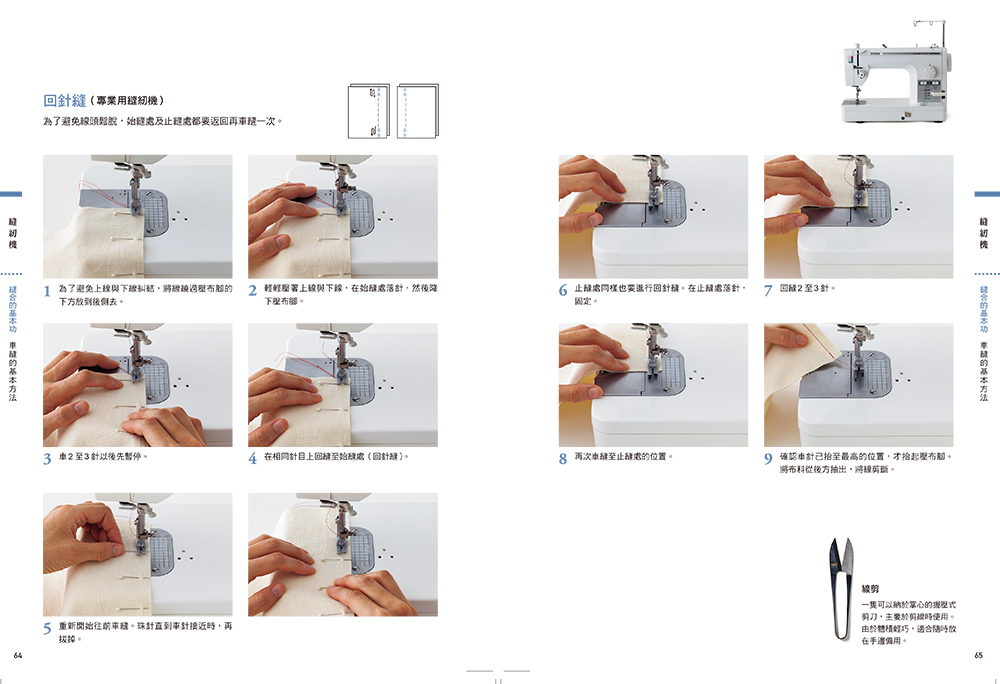
Backstitch (Start and End)
Basic Sewing Techniques
Sewing Machine Settings
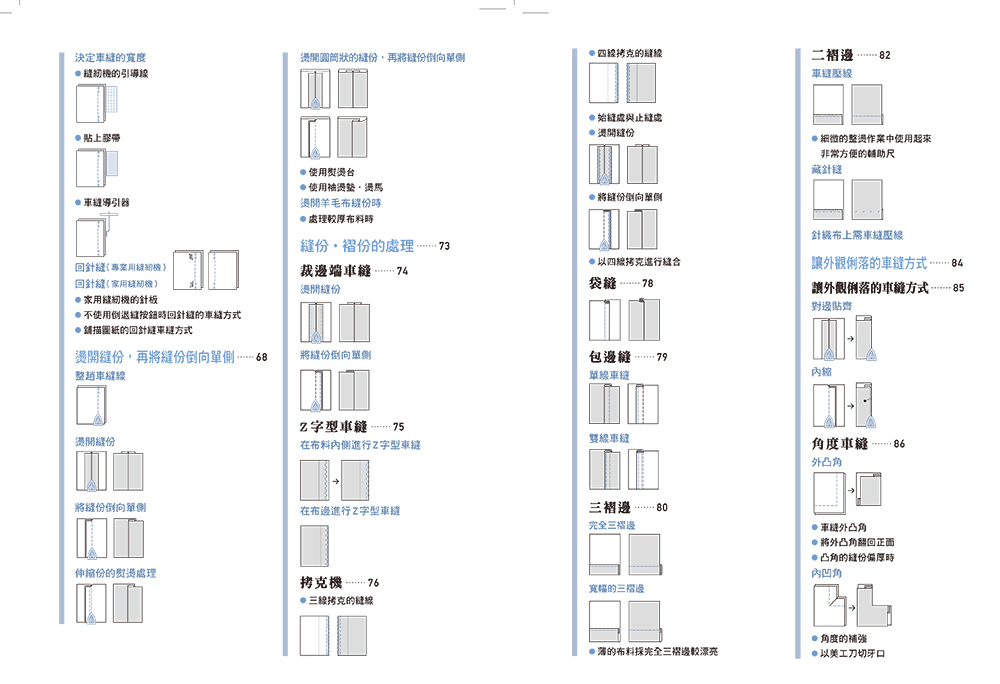
Deciding Seam Width
- Guided line on sewing machine
- Using tape
- Seam guide
Backstitch (Professional and Domestic)
- Domestic sewing machine needle plate
- Sewing backstitch without reverse button
- Sewing backstitch on tracing paper
Pressing open seams and folding seam allowances to one side
Sewing entire seam line
Pressing seam allowances open
Folding seam allowances to one side
Handling stretch seams with pressing
Pressing cylindrical seams open and folding to one side
- Using pressing ham or sleeve board
Handling thick fabrics when pressing seams
Seam and Fold Edge Finishing
Edge stitching
- Using a small, handy bamboo ruler for precise pressing
Hidden seam stitches
Sewing with seam allowances on knitted fabrics for a cleaner look
Methods for neat, professional-looking seams
Aligning edges
Inner seam allowances
Outer corner seams
- Sewing outer corners with allowances
- Turning outer corners right side out
- When allowances are thick at corners
Inner corners
- Reinforcing corners
- Cutting notches with craft knife
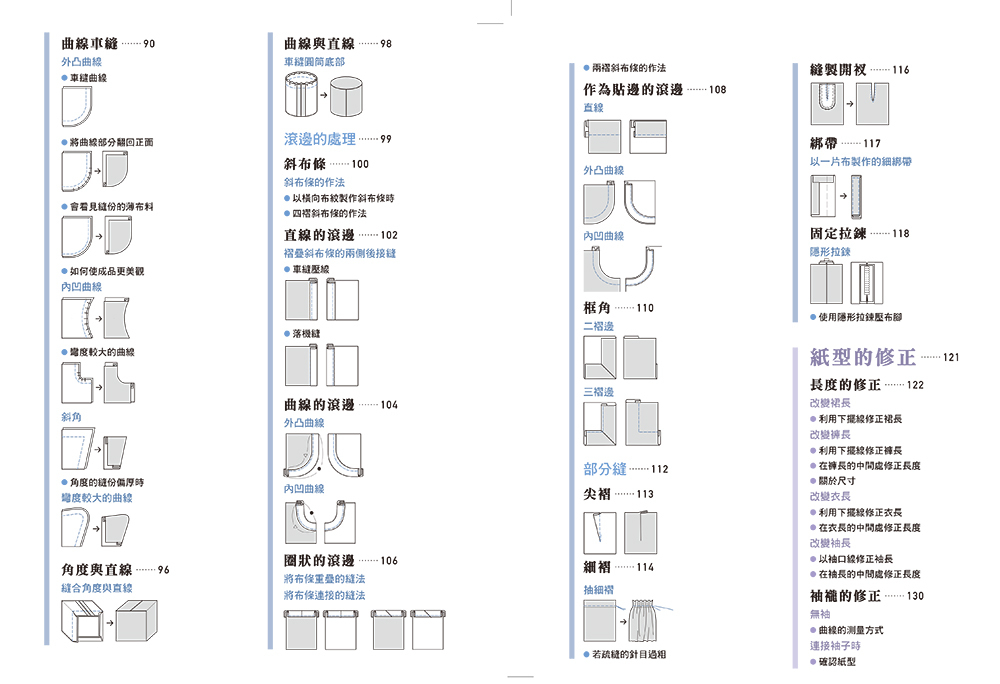
Curved seams
Outer curves
- Sewing curved seams
- Turning curved sections right side out
- Thin fabrics where seam allowances are visible
- Tips for a neater finish
Inner curves
- Larger curves
Angles
- When allowances are thick at angles
- Larger curved seams
- Combining angles and straight lines
- Sewing angles and straight lines
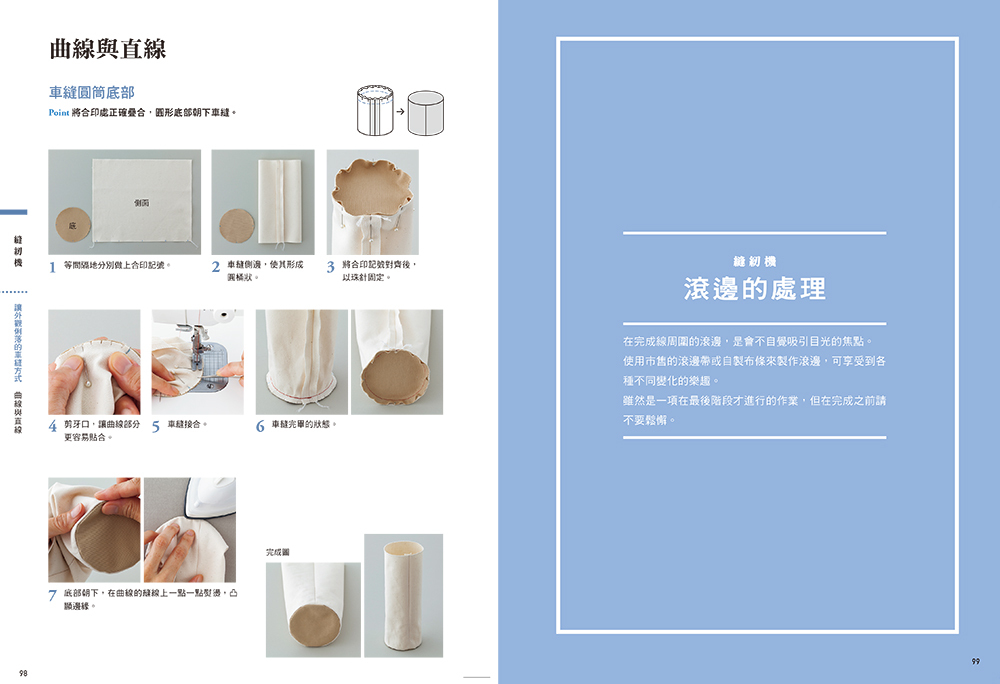
Seaming cylindrical bottoms
Edge finishing techniques
Bias strips
- Making bias strips from crosswise fabric
- Making double-fold bias strips
Straight edge finishing
Folding bias strips and attaching to edges
- Sewing with seam allowances
- Hemming
Curved edge finishing
Outer curved seams
Inner curved seams
Round hems
Overlapping fabric strips for hems
Joining fabric strips
Double-fold bias strips for hems
Using as edge binding
Straight lines
Outer curved seams
Inner curved seams
Corner finishing
Double fold edges
Triple fold edges
Partial seams
Pointed folds
Fine folds
Drawn tucks
- When basting stitches are too coarse
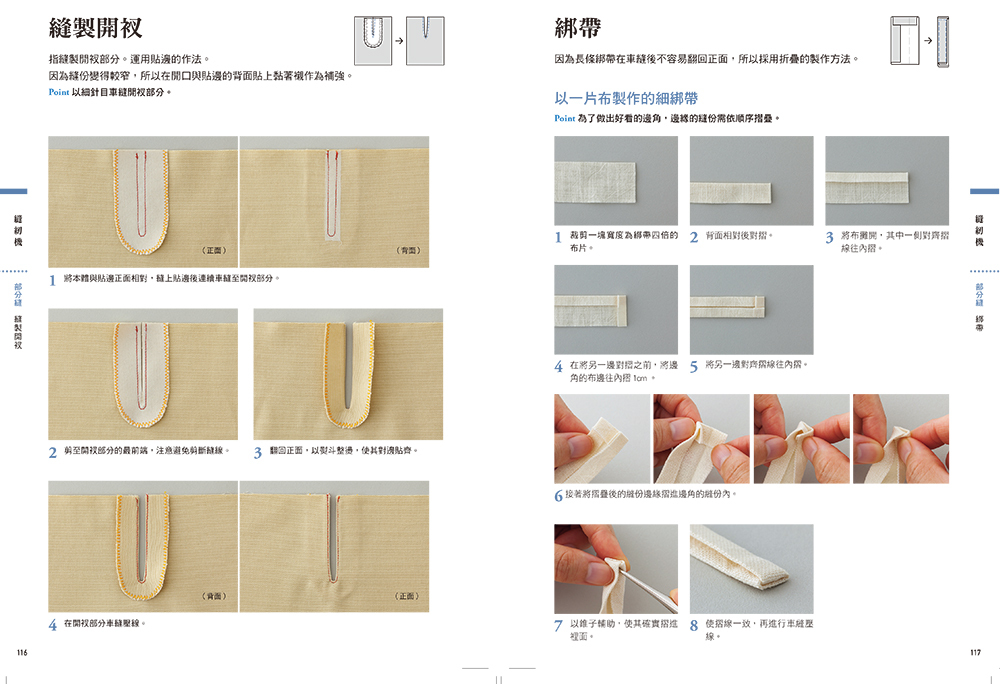
Sewing slits
Binding with strips
Making narrow straps from fabric
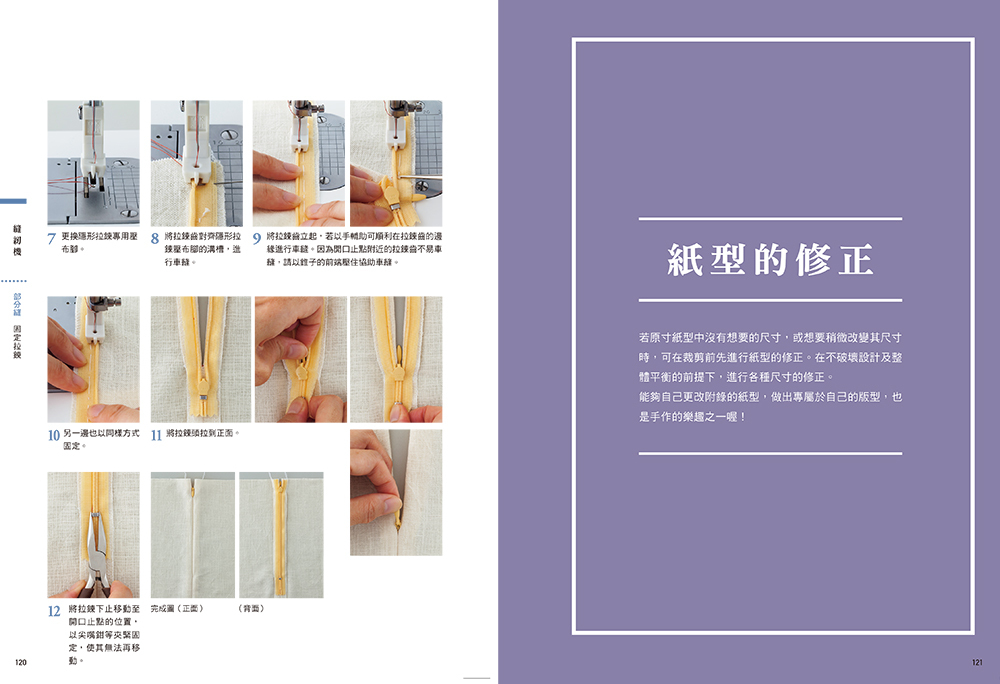
Attaching zippers
Invisible zippers
- Using invisible zipper foot
Pattern Adjustment
Length adjustments
Changing skirt length
- Using hemline to adjust length
Changing pant length
- Using hemline to adjust length
- Adjusting length at the middle of the pant
About sizing
Changing garment length
- Using hemline to adjust length
- Adjusting length at the middle of the garment
Changing sleeve length
- Using cuff line for adjustment
- Adjusting length at the middle of the sleeve
Sleeve placket adjustments
Sleeveless designs
- Measuring curved lines
Connecting sleeves
- Confirming pattern
This completes the translation of the provided content.